
Inside the Engine Room of Change
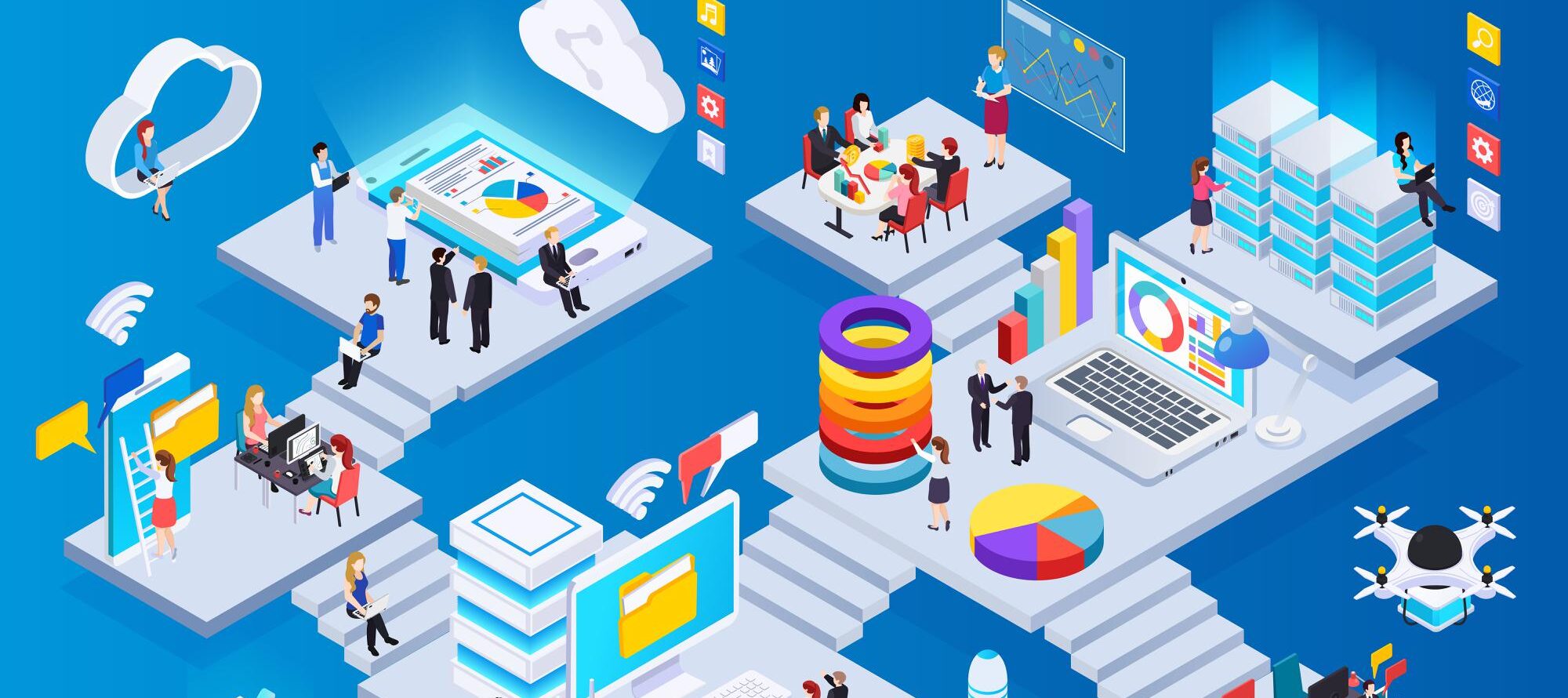
In global capability centers, job roles shift, new leaders rise, and big strategies are tested in real time. While companies plan for the future in meetings and slides, the future…


Everyone is trying to predict the future of work. Boardrooms are filled with plans, consultants pitch models, and HR teams run workshops on AI, automation, and reskilling. But while companies look outward for answers, something quieter and more real is already happening. Inside global capability centers, in cities like Bengaluru, Manila, and Kraków, the future isn’t being discussed. It’s being lived. Teams are adapting, roles are shifting, and new forms of leadership are emerging, often without formal permission or process. These centers, often seen as operational backbones, are turning into live labs for what the world of work is becoming.
These centers, particularly in India, Poland, and the Philippines, are not just operating at scale. They are absorbing the impact of automation first, managing multigenerational hybrid teams, and rapidly reshaping roles to match emerging realities. If you want to understand how fast skills erode, where leadership is lagging, or how to design teams for AI-augmented execution, do not look up. Look inside your GCCs.
They are not lagging indicators. They are your enterprise’s most accurate forecast.
GCCs Reflect, at Scale, the New Realities of Work
Consider the architecture of today’s GCCs. They operate across technology, compliance, R&D, product, finance, and increasingly, sustainability.
They manage hybrid, multigenerational teams across geographies. They face automation and augmentation earlier than headquarters. Most importantly, they maintain standard governance and tooling across high-variance talent pools, creating one of the richest sources of enterprise-wide workforce insight.
Take role mutation. In most GCCs, the average time for a role to evolve in title, scope, or reporting line is now under 24 months. Job taxonomies are collapsing. Functions are blending. The traditional notion of a “career ladder” is being replaced by skill-based paths. These changes are visible first in GCCs and should inform how companies update job architectures, learning frameworks, and performance management systems.
Attrition is another underutilised lens. Most attrition models are descriptive and backward-looking. GCCs, with their structured feedback systems and high-scale data environments, offer early warnings. Metrics such as skill stagnation, internal transfer failure, or low project engagement often precede exits. One global tech firm used sentiment analysis and project rotation data from its India GCC to redesign mid-career upskilling pathways, resulting in a 19% increase in retention in automation-exposed teams.
Leadership is also being rewritten in these centers. Many GCC leaders now manage global, virtual, cross-functional teams without traditional P&L control. This environment is producing a new generation of leaders fluent in systems thinking, distributed execution, and stakeholder navigation. Yet many of these individuals are excluded from enterprise succession pipelines simply because they do not sit in headquarters.
The Case for GCCs as Workforce Intelligence Systems
The implications are significant. GCCs should not be viewed as execution units. They should be treated as live workforce sensing systems that inform strategic planning.
Some organisations are making this pivot. A global pharmaceutical firm has embedded its Hyderabad GCC into the central workforce planning team. This center now not only runs L&D budgets but also produces quarterly insight reports on role evolution and future skill adjacency. A multinational bank has formalised “talent sensing” roles in its Singapore and Bengaluru centers to report workforce friction during tech transitions. A large energy company uses GCC-based teams to simulate future team configurations using internal mobility and skill progression data before implementing global restructuring programs.
These practices shift workforce planning from hypothetical to evidence-based. More importantly, they allow the enterprise to test, validate, and refine workforce decisions in a high-volume, controlled environment.
This also allows for rapid prototyping of new workforce models. Several GCCs are already testing pod-based team structures, AI-integrated workflows, dynamic skill mapping, and incentive redesign. Their operational flexibility makes them ideal experimentation labs for the enterprise, without the reputational or financial risk associated with global rollout.
What Enterprise Leaders Should Do Next
Unlocking the full strategic potential of GCCs in workforce design requires deliberate action.
First, shift the mental model. GCCs are not just talent delivery systems. They are forward-looking, pattern-rich data environments that reflect how skills, roles, and teams are evolving under pressure. Second, connect GCC data to enterprise systems. Performance feedback, skill tracking, learning progression, and attrition modeling must feed directly into global workforce architecture and planning tools.
Third, invest in workforce innovation teams inside GCCs. These teams should be funded and chartered to prototype new job designs, team constructs, and career pathways. Their insights should be reviewed at the same level as external benchmarks. Fourth, include GCC leaders in workforce strategy conversations. Their proximity to both execution complexity and talent transformation gives them a valuable dual lens. They must be present when enterprises rethink how they build, retain, and lead teams.
Finally, create real incentives for GCCs to surface early signals. Today, many do so informally or reactively. With formal mandates and accountability, these centers can become engines of workforce foresight.
Enterprises are spending aggressively to prepare for a future defined by AI, talent scarcity, and role fluidity. But they are missing the most immediate, empirical source of insight. GCCs are not theoretical testbeds. They are where automation collides with human capital. They are where tomorrow’s leaders are managing today’s uncertainty. They are where job roles mutate, skills decay, and new models emerge.
Organisations that pay attention to these signals will make better, faster decisions about how to organise, incentivise, and develop their workforce. Those that do not will spend years reacting to trends they could have anticipated. The future of strategic workforce planning is not abstract. It is being written, every day, inside your GCCs.
(The author is Managing Partner, Gnothi Seauton. Views expressed are personal.)