Tag: GCC India

  • India’s Mid-Market GCCs Emerge as Key Players in Global Innovation: Nasscom-Zinnov Report

    India’s Mid-Market GCCs Emerge as Key Players in Global Innovation: Nasscom-Zinnov Report

    GCC Hub Team

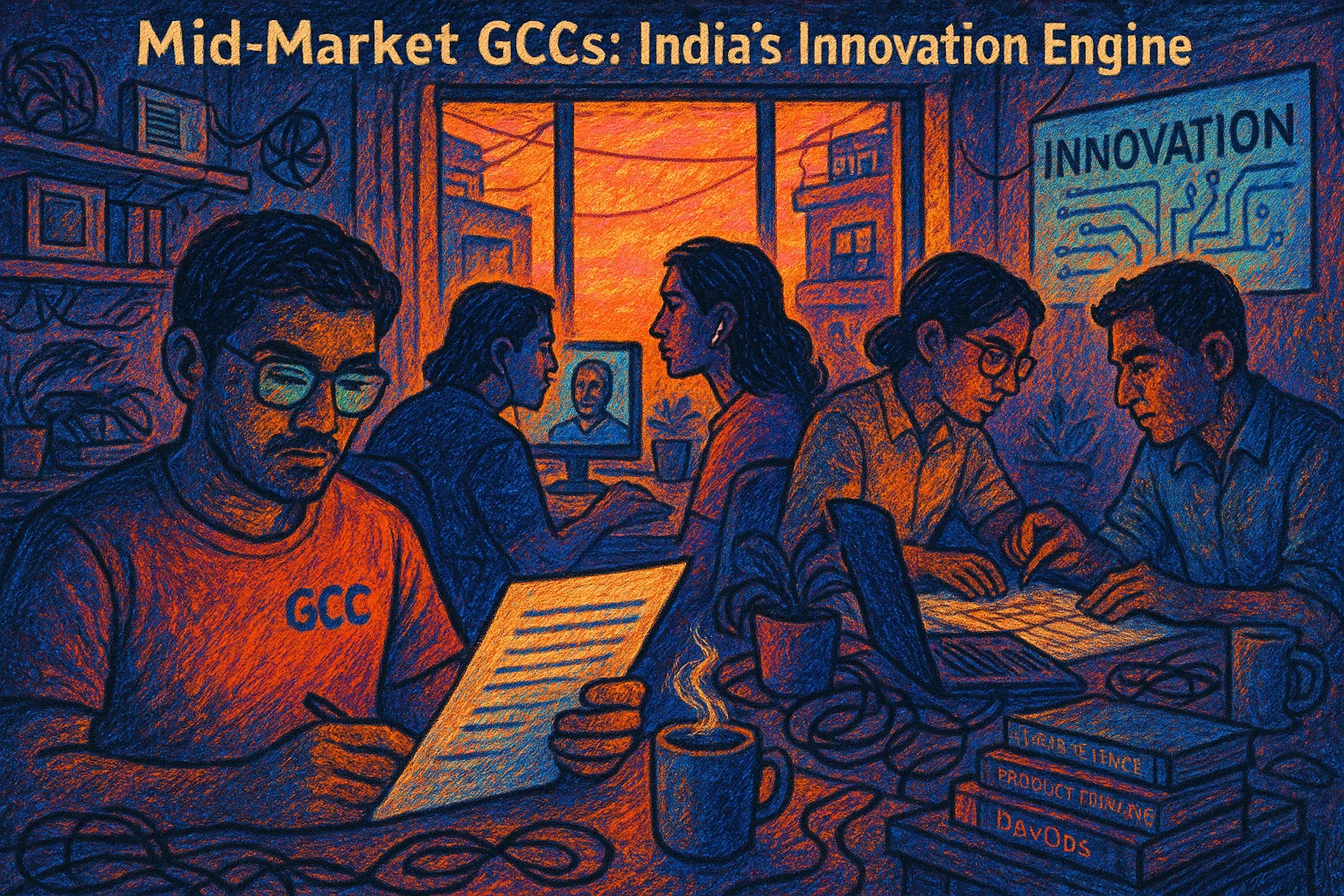
    India’s Global Capability Centers (GCCs) are undergoing a significant transformation, with mid-market segment driving growth and innovation, according to a latest report by Nasscom and Zinnov. The report, `India’s GCC Leap – Powering Global Mid-Market Momentum,’ highlights the growing influence of mid-market GCCs in deep technology domains such as Artificial Intelligence/Machine Learning, cloud computing, cybersecurity, and data science.

    Mid-Market GCCs: A New Era of Innovation

    Mid-market GCCs are rapidly evolving beyond traditional execution-focused roles, becoming significant contributors to their parent organizations’ market strategies and influential players in their respective industries. These centers are characterized by higher maturity as transformation hubs, deeper product capabilities, and a high concentration of niche deep tech skills.

    The report notes that India’s current mid-market GCC landscape comprises over 480 centers and 680 units, employing more than 210,000 individuals and constituting 27% of total Indian GCCs and 22% of their units. Over 45 new mid-market GCCs have set up operations in India in the past two years alone, accounting for nearly 35% of total GCCs and 30% of total GCC units during this period.

    Challenges and Opportunities

    While mid-market GCCs face challenges in attracting early-career talent, lack standardized operating procedures, and struggle to establish innovation partnerships, the future outlook is promising. With the potential to attract 30-40K of the 130k-150k global mid-market companies, mid-market GCCs in India can transform into AI-native innovation engines and achieve a sustainable global edge through strategic development and favorable ecosystem support.

    Growth Drivers

    The growth of mid-market GCCs in India is driven by a combination of factors that are creating a perfect storm of opportunity, including the increasing demand for specialized skills in deep technology domains such as AI, ML, and cybersecurity, which India is well-positioned to provide, and the growing need for innovation and digital transformation across industries, which mid-market GCCs are well-suited to deliver.

    This growth is further fueled by the availability of a large talent pool in India, which is a key differentiator for the country, and a favorable business environment and government support, which is providing the necessary infrastructure and incentives for GCCs to thrive, and all these factors combined are creating a conducive environment for mid-market GCCs to flourish in India and make significant contributions to the country’s economy.

    The rise of mid-market GCCs in India is a pivotal development shaping the future of global capability building in the country. With their growing influence in driving innovation and contributing to their parent organizations’ market strategies, mid-market GCCs are set to play a key role in India’s GCC landscape. 

  • Infosys Bolsters GCC Practice with Key Appointment

    Infosys Bolsters GCC Practice with Key Appointment

    GCC Hub Team

    Infosys has appointed Deval Shah as the leader of its Global Capability Centre (GCC) practice, a significant move aimed at capitalizing on the growing demand for specialized services in India, according to the Times of India.

    Shah, currently VP and Delivery Head at Infosys, brings extensive experience to the role, having previously served as MD and Country Head of India for Danske IT and Support Services India.

    The appointment comes two years after Infosys won a $454-million contract from Danske Bank, which involved acquiring the bank’s IT centre in India employing over 1,400 professionals. The company is currently accelerating Danske Bank’s technology transformation, optimizing access to talent and capabilities, and improving productivity, the report said.

    GCCs have emerged as strategic hubs for innovation, product development, and digital transformation in India, with many multinational companies setting up centers to leverage the country’s vast talent pool and cost advantages. Infosys’ move to establish a full-fledged GCC practice reflects this trend, with the company working closely with GCCs and clients to set up or scale different models.

    Infosys’ GCC practice has seen significant wins recently, including a nearly $300 million IT contract with Lufthansa, which involves setting up a GCC in Bengaluru to enhance software development and product support. This move is expected to further strengthen Infosys’ position in the GCC space.

    The appointment of Shah and Infosys’ focus on GCCs reflect a broader industry trend, with many IT services companies recognizing the importance of GCCs in delivering specialized services. Cognizant, for instance, has appointed Sailaja Josyula as the global head of its GCC service line, overseeing the execution of its global GCC strategy.

    The growing importance of GCCs in India’s IT landscape is expected to drive further growth and innovation in the sector, with companies like Infosys and Cognizant well-positioned to benefit from this trend.

  • Episode 3: India’s GCC Boom: AI Talent, Walmart Expansion & the Future of Captive Centers

    In this episode of the GCC Hub Podcast, we explore the rapid evolution of global capability centers in India. From Ladera Technology’s new AI-driven office in Bangalore to Walmart’s second GCC in Chennai, we dive into the trends, talent demands, and the shifting definition of what a GCC really is. Plus, insights from McKinsey and Quest highlight why India is poised to become a $105B GCC powerhouse by 2030.

  • India’s GCC Boom Fuels Demand for Office Space: Table Space Reports 41% Growth

    India’s GCC Boom Fuels Demand for Office Space: Table Space Reports 41% Growth

    GCC Hub Team

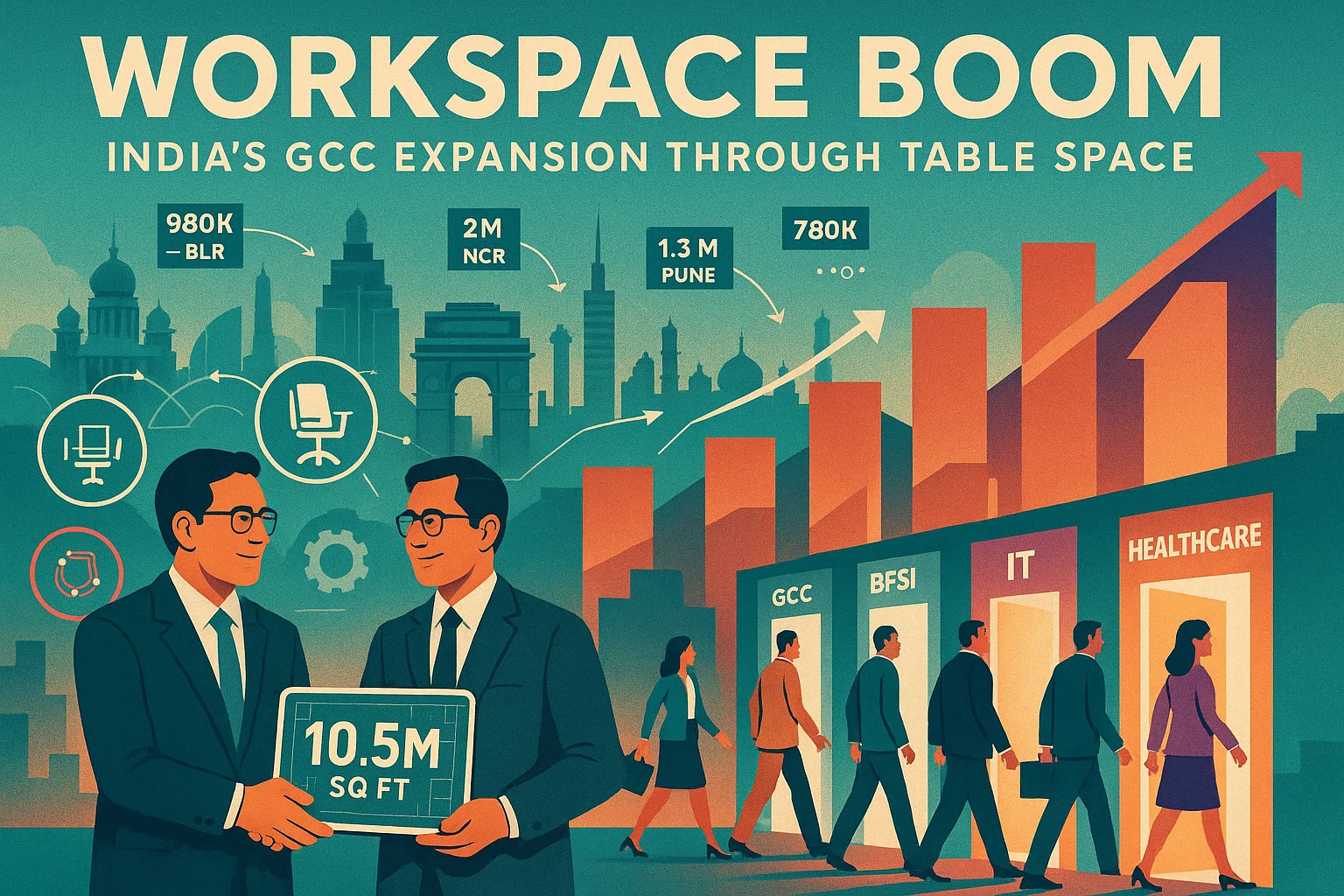
    Table Space, a managed workspace provider, has reported a 41% year-on-year growth in FY25, with its portfolio reaching 10.5 million sq ft, driven by demand from Global Capability Centres (GCCs) in India.

    According to the company, one-third of the overall portfolio addition came from Bengaluru, with the city contributing 980,000 sq ft of office space. Other major contributors included the National Capital Region (682,000 sq ft), Pune (542,000 sq ft), and Hyderabad (415,000 sq ft).

    “The accelerating demand from GCCs expanding in India has been a key driver of our growth,” said Kunal Mehra, Co-CEO of Table Space, as quoted by Hindustan Times.

    GCCs, which are Indian subsidiaries of multinational companies, have been increasingly setting up operations in the country, leveraging India’s large talent pool and cost advantages. The sectoral leasing demand was led by software/IT/ITeS, followed closely by banking, financial services and insurance (BFSI) and healthcare, pharma and biotech.

    Table Space’s growth strategy is focused on expanding in high-potential micro-markets across India’s major business hubs, including Bengaluru, NCR, Pune, Hyderabad, Mumbai, and Chennai. The company added 3.01 million sq ft to its portfolio in FY25, with 16 newly launched centers contributing 76% of premium, managed workspaces.

    “Our unique strength lies in offering a full-spectrum managed workspace solution designed for enterprises,” Mehra said, highlighting the company’s ability to cater to the diverse needs of large enterprises.

    The growth of GCCs in India is expected to continue, driven by the country’s favorable business environment and large talent pool. As Karan Chopra, Chairman and Co-CEO of Table Space, noted, “Each new center is a strategic move to serve the evolving demands of enterprise clients across diverse sectors.”

  • Cognizant Flags GCCs as Potential Threat in Annual Report

    Cognizant Flags GCCs as Potential Threat in Annual Report

    GCC Hub Team

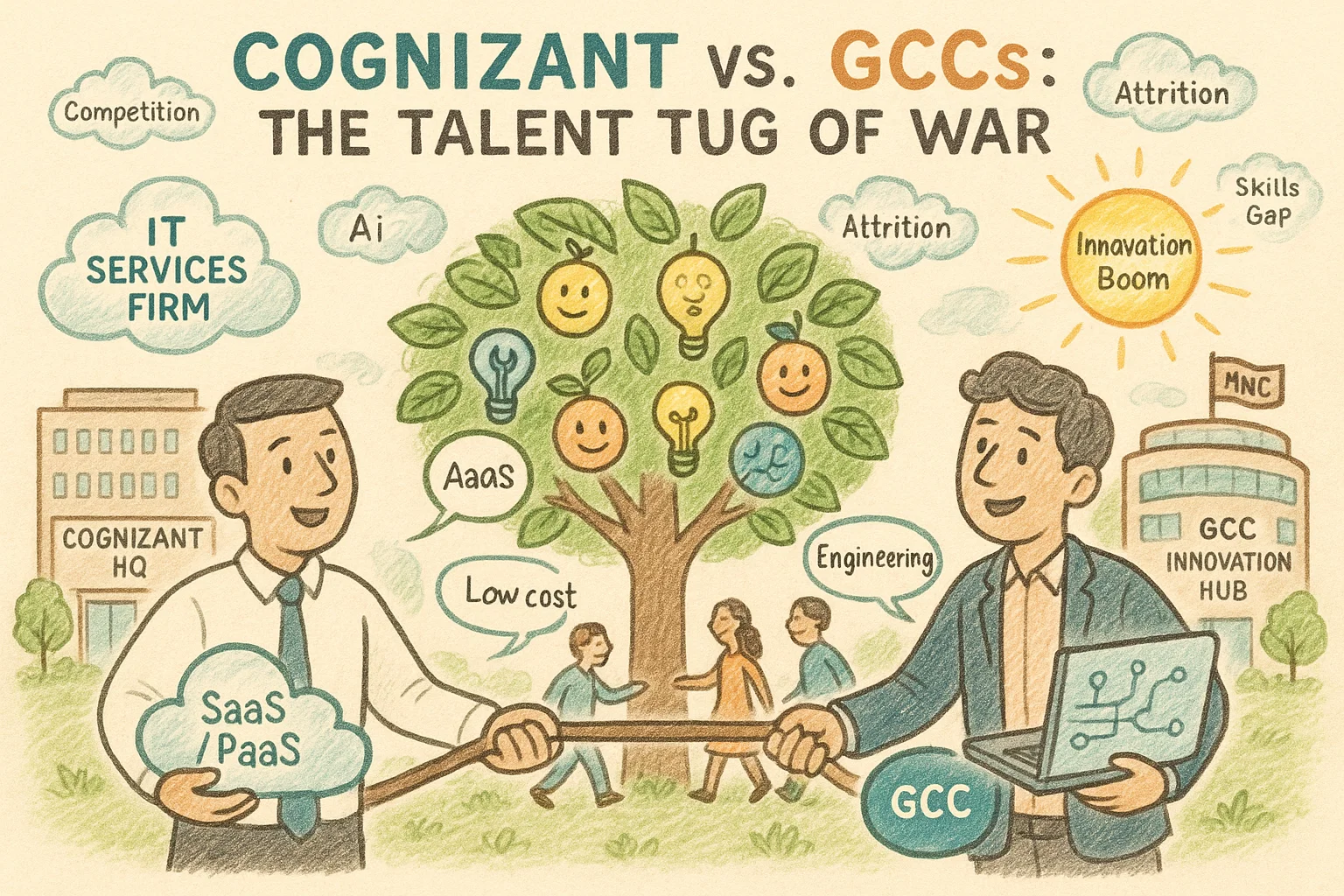
    Information technology (IT) services major Cognizant Technology Solution Corp. has flagged risks from the growing business spread of global capability centres (GCCs), offshore captive hubs of multinationals offering a range of solutions for their parents, including value-added services such as Software as a Service (SaaS), Platform as a Service (PaaS) as also sophisticated engineering, legal and insurance services.

    Cognizant, in its annual report, has signposted key areas obliquely alluding to potential business loss from clients who could prefer assigning work to their homespun offshore GCCs driven by cost and efficiency arbitrage, besides clamouring to draw talent from the same pool.

    “The markets for our services are highly competitive, characterized by a large number of participants and subject to rapid change. Competitors may include systems integration firms, contract programming companies, application software companies, cloud computing service providers, traditional consulting firms, professional services groups of computer equipment companies, infrastructure management companies, outsourcing companies, boutique digital companies and clients’ in-house technology resources, such as GCCs,” the IT major said in its annual report.

    “In addition to large, global competitors, we face competition in many geographic markets from numerous smaller, local competitors that may have more experience with operations in these markets, have well-established relationships with our desired clients, or be able to provide services and solutions at lower costs or on terms more attractive to clients than we can. Additionally, we face competition from clients’ in-house technology resources, such as GCCs, which may provide a lower cost alternative to our services,” it said.

    Besides, there is also the aspect of attracting talent that has become competitive among IT services companies and GCCs.

    “Competition for skilled labor is intense and, in some jurisdictions in which we operate and in key AI and digital areas, there are more open positions than qualified persons to fill these positions. We compete for employees not only with other companies in our industry but also with companies in other industries, such as software services, engineering services and financial services companies, as well as our clients’ GCCs”, the Cognizant report said.

  • India’s Global Capability Centers Emerge as Powerhouses in Global Gaming Industry

    India’s Global Capability Centers Emerge as Powerhouses in Global Gaming Industry

    GCC Hub Team

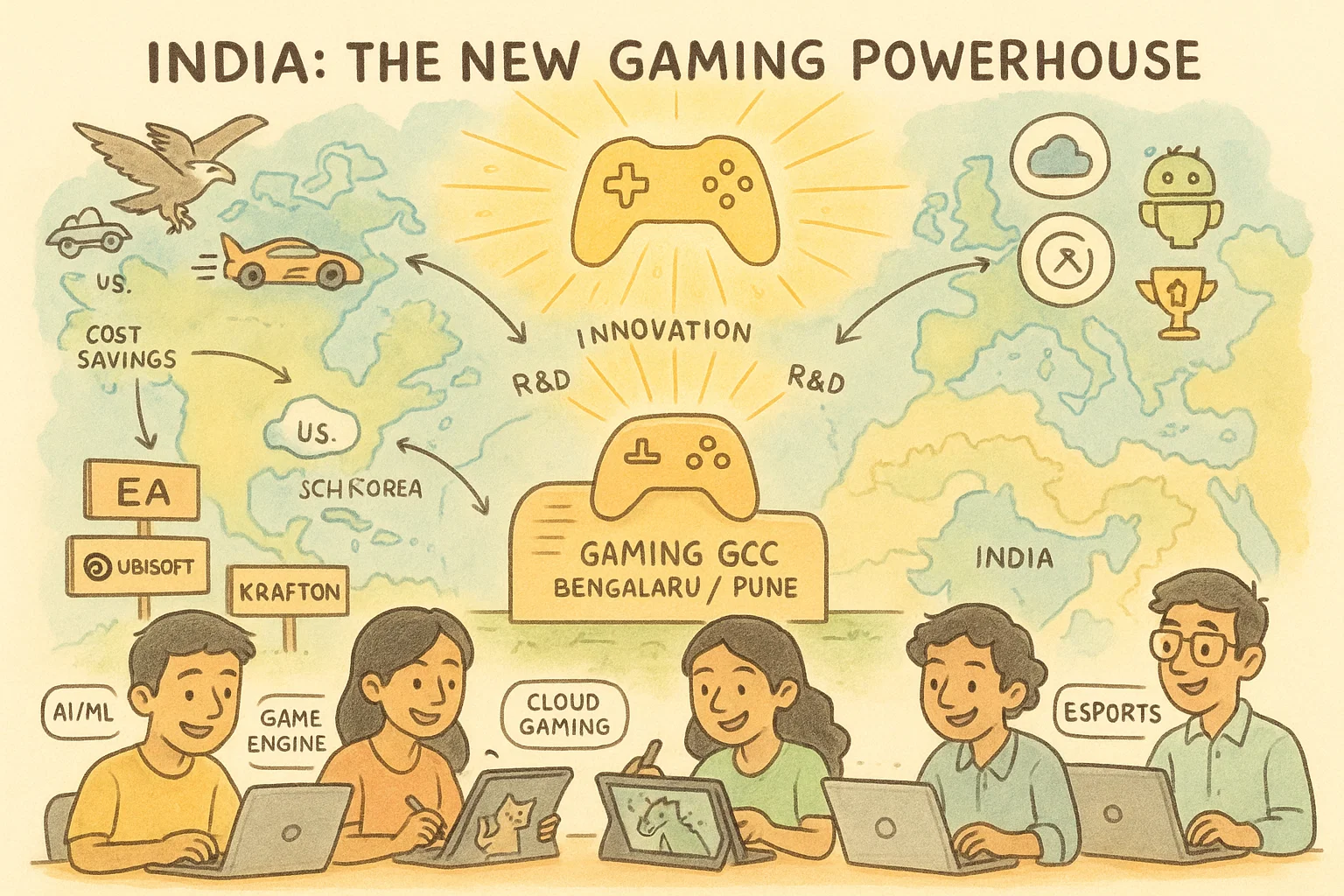
    The global gaming industry, valued at $242 billion in 2025, appears to be undergoing a significant transformational shift. Amidst rising operational costs in traditional hubs like the U.S., South Korea, and Japan, global gaming giants are recalibrating their strategies, with India’s Global Capability Centers (GCCs) emerging as strategic powerhouses, industry body NASSCOM has said in a blog post.

    Companies like Electronic Arts, Ubisoft, and Tencent are leveraging India’s GCC ecosystem to achieve 30-50% cost savings, accelerate R&D cycles, and scale live operations globally. India’s cost-efficient talent pool, with salaries significantly lower than in Western markets, is driving this trend. A senior game developer in India earns approximately $40,000 per year, compared to $90,000+ in South Korea and $120,000+ in the U.S.

    India’s gaming talent matrix boasts expertise in AI/ML, game engines, and emerging tech like cloud gaming and blockchain. GCCs are structuring operations in phases, starting with AI and core game development, followed by live operations and localization, and finally, blockchain and full-cycle development. Ubisoft’s Pune center, with over 1,000 employees, is a full-fledged AAA production hub contributing to flagship franchises like Assassin’s Creed and Far Cry.

    Global gaming leaders are betting big on India’s GCC ecosystem, with Krafton planning to establish an R&D center in Bengaluru or Pune focused on AI-driven esports analytics. Microsoft, Google, and Amazon are also leveraging India’s expertise in cloud infrastructure and AI-driven gaming solutions. Microsoft’s GCC in Hyderabad supports Xbox cloud gaming and Azure AI integration, while Google’s Bangalore GCC develops Android gaming SDKs and developer tools.

    India’s homegrown gaming startups, such as JetSynthesys and Nazara Tech, are also making waves, with partnerships with global IPs and esports ventures. JetSynthesys has carved a niche in digital entertainment through partnerships with global IPs and esports ventures, including a collaboration with Sachin Tendulkar for mobile gaming. Nazara Tech commands a robust portfolio spanning esports, gamified learning, and hyper-casual games, the NASSCOM blog post said.

    The country’s gaming market is projected to grow to $1.5 billion by 2028, with 30 million gamers. As global gaming leaders face a choice between legacy hubs and India’s GCC ecosystem, early movers like EA and Ubisoft have already staked their claims. India is poised to become a critical node in the gaming value chain, driving innovation and growth in the industry.

  • HCLTech Doubles Down on GCC Focus in India, Sees Potential Demand Surge

    HCLTech Doubles Down on GCC Focus in India, Sees Potential Demand Surge

    GCC Hub Team

    HCLTech, a leading software major, plans to ramp up its focus on Global Capability Centres (GCCs) in India, after partnering with over 200 such captives across the country. The company declared India-specific revenue numbers for the first time, highlighting the country’s growing significance as a major focus area.

    “We’re already present in more than 200 GCCs across the Indian landscape and we’re going to double down our focus on GCCs,” said C Vijayakumar, CEO & Managing Director, HCLTech, while addressing a press conference after declaring the Q4 results.

    GCCs have gained significant traction in recent years, with India emerging as the GCC capital of the world. According to the Economic Survey 2024, expansion and investments by multinational companies are set to contribute roughly 3.5 percent of India’s GDP by 2030, generating an estimated revenue of $121 billion by then.

    HCLTech has been working with GCCs since 2012 and offers multiple engagement models, including Workforce Deployment, Build, Own, Operate and Transfer (BOOT/BOT) model, Strategic Joint Ventures (JVs), and IP Partnerships. The company sees a potential demand surge in this segment, driven by the growing presence of APAC-based companies in India.

    A spokesperson from HCLTech told Moneycontrol.com that the company expects a significant increase in demand for GCC services, driven by the US and EMEA-based companies, which currently hold the lion’s share of the 1,600-odd GCCs in India. “We see a potential demand surge in this segment. While the US and EMEA hold the lion’s share of the 1,600-odd GCCs in India, several APAC-based companies are also looking at India,” the spokesperson added.

    HCLTech’s decision to double down on its GCC focus in India reflects the company’s confidence in the country’s potential as a hub for innovation and technology. With new announcements expected in the coming weeks, the company is poised to further strengthen its position in the GCC space.

  • 5% of Lifetime Spent Commuting: The Hidden Cost of India’s GCC Boom

    5% of Lifetime Spent Commuting: The Hidden Cost of India’s GCC Boom

    GCC Hub Team

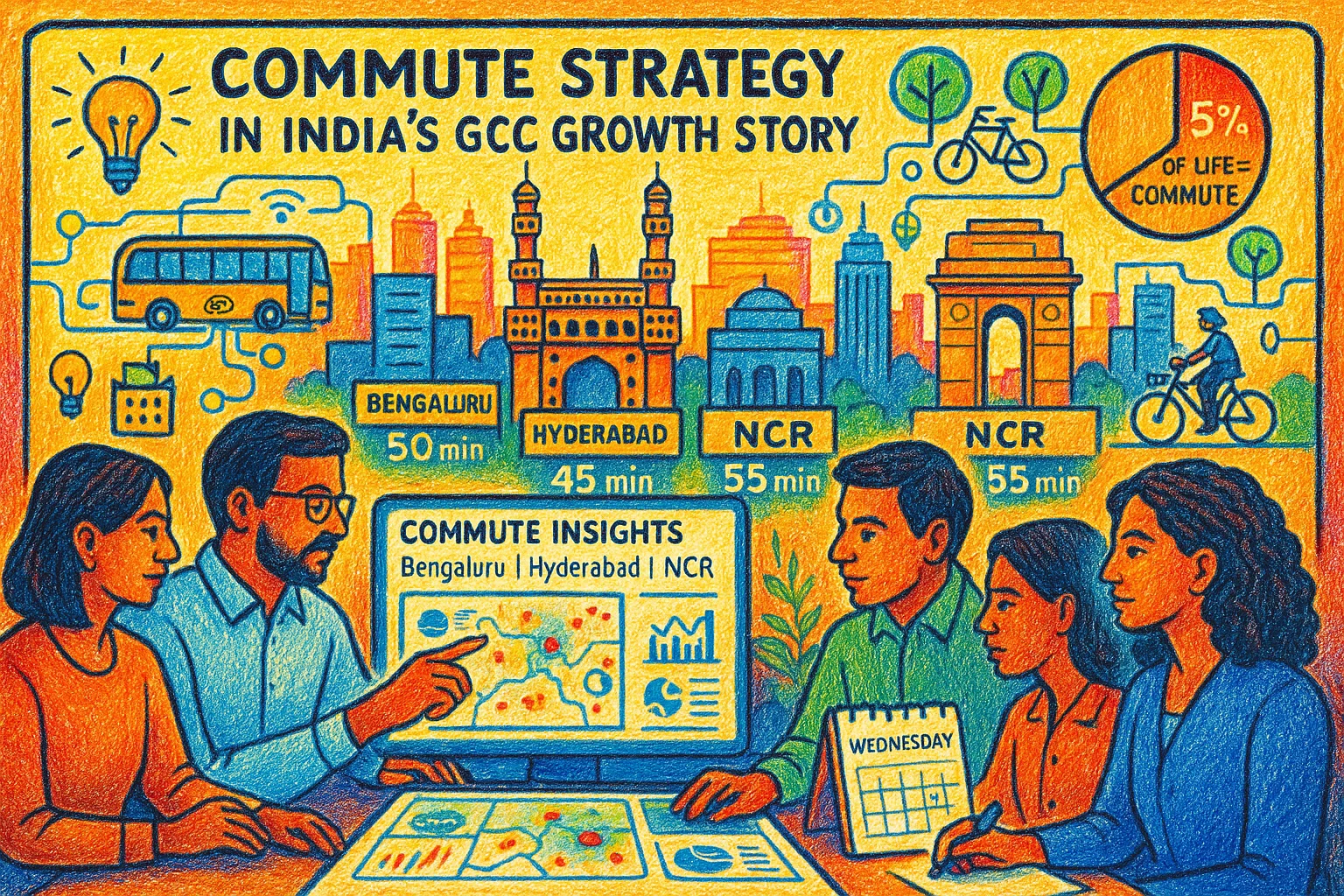
    A new report by MoveInSync, an employee commute platform, has revealed that the global capability center (GCC) workforce in India’s top cities spends a significant 5% of their lifetime commuting to office, highlighting the importance of efficient commute solutions for talent attraction and retention.

    According to the report, which analyzed commute data from Q1 2025, GCC employees in Bengaluru, Hyderabad, and the National Capital Region (NCR) spend an average of 50 minutes, 45 minutes, and 55 minutes commuting one way, respectively. The report also found that employees work from the office an average of 2-3 days a week, with Wednesdays being the most popular in-office day.

    India has emerged as a leading destination for global enterprises establishing GCCs, with a 32% increase in the number of centers over the past five years. Bengaluru, Hyderabad, and NCR are at the forefront of this expansion, accounting for 30%, 14%, and 16% of the total GCC market, respectively.

    Commute Trends

    The report highlights some key trends in commute patterns:

    Industry-specific commute patterns: Pharma and BFSI sectors prefer more in-office time, while retail and entertainment sectors lean towards remote work.

    Midweek peak: Wednesdays see the highest cab bookings across companies, while Fridays are surprisingly light.

    Commute strategy: Commute data is becoming a key lever for talent retention, with companies using it to design better schedules, wellness policies, and real estate plans.

    Sustainability Initiatives

    GCCs are increasingly adopting electric vehicles (EVs) and ride-sharing to reduce carbon emissions and promote eco-friendly commutes. Transport costs are being optimized with increased user adoption, enabling better route optimization and reduced per-person travel expenses.

    The report’s findings highlight the importance of commute solutions in the GCC sector, particularly in India’s top cities. As the sector continues to grow, companies will need to prioritize efficient and sustainable commute solutions to attract and retain top talent.

    “That’s 4 years over a 40-year career. No wonder commute strategy is becoming a key lever for talent retention. Commute data isn’t just operational. It’s strategic. Use it to design better schedules, wellness policies, and real estate plans,” MoveInSync said in a LinkedIn post highlighting the report’s findings..

  • Walmart Expands India Presence with Second GCC in Chennai

    Walmart Expands India Presence with Second GCC in Chennai

    GCC Hub Team

    Walmart’s Indian technology arm has leased approximately 465,000 square feet of office space in Chennai to establish its second Global Capability Centre (GCC) in India, the Economic Times has reported. 

    The new center, located at the International Tech Park Chennai (ITPC), will bolster Walmart’s technology capabilities, tapping into India’s skilled workforce and favourable business environment.

    This move highlights Walmart’s growing investment in India’s thriving tech ecosystem, building on its existing GCC in Bengaluru. The expansion underscores India’s emergence as a hub for GCCs, attracting multinational companies seeking to drive innovation, digital transformation, and business growth.

    Walmart Global Tech, the retail giant’s technology arm, is leveraging India’s talent pool to power its global retail operations. The company has been at the forefront of adopting cutting-edge technologies, including artificial intelligence, machine learning, and cloud-powered tools, to personalize customer experiences and optimize operations.

    India’s GCC market has been attracting multinational companies (MNCs) due to its skilled workforce, favourable business environment, and government initiatives to support the growth of the sector.

    GCCs have become a key driver of innovation and growth for MNCs in India. These centers enable companies to leverage India’s talent pool, infrastructure, and favorable business environment to drive digital transformation, improve operational efficiency, and develop new products and services.

    Walmart’s decision to set up a second GCC in India demonstrates its commitment to the country’s tech ecosystem. The company has been investing in India, leveraging the country’s skilled workforce and favourable business environment to drive growth and innovation.

    With this expansion, Walmart is poised to further strengthen its tech capabilities in India, driving growth and innovation for the company. As India’s GCC market continues to attract MNCs, the country is likely to remain a key destination for tech investments and innovation.

  • Episode 2: GCCs Reshaping Tech, Energy, Realty Sectors

    In this episode, we bring to you trends that demonstrate how India’s Global Capability Centres (GCCs) are reshaping its tech, energy, and real estate landscapes. Boutique enablers, sustainable energy innovation, and skyrocketing office demand mark a transformative shift. With 1,700+ GCCs and counting, India is emerging as the global epicenter for digital innovation, talent, and enterprise growth across multiple sectors. Tune in.